Water treatment, grown not dosed.
A nature-based remedy for onshore aquaculture wastewater challenges, delivered as hardware-as-a-service. Algae treat the water, and byproducts pay for it.
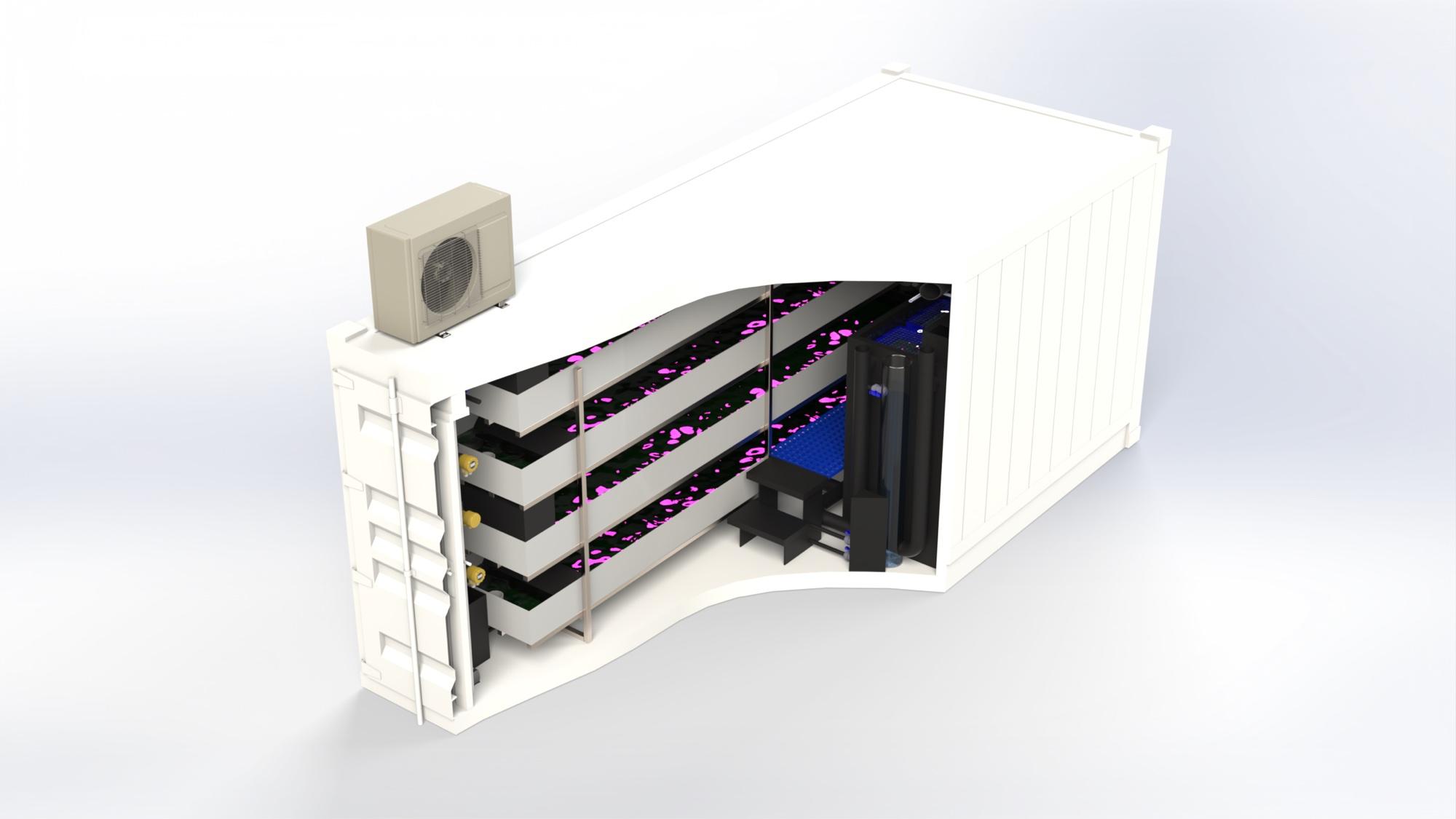
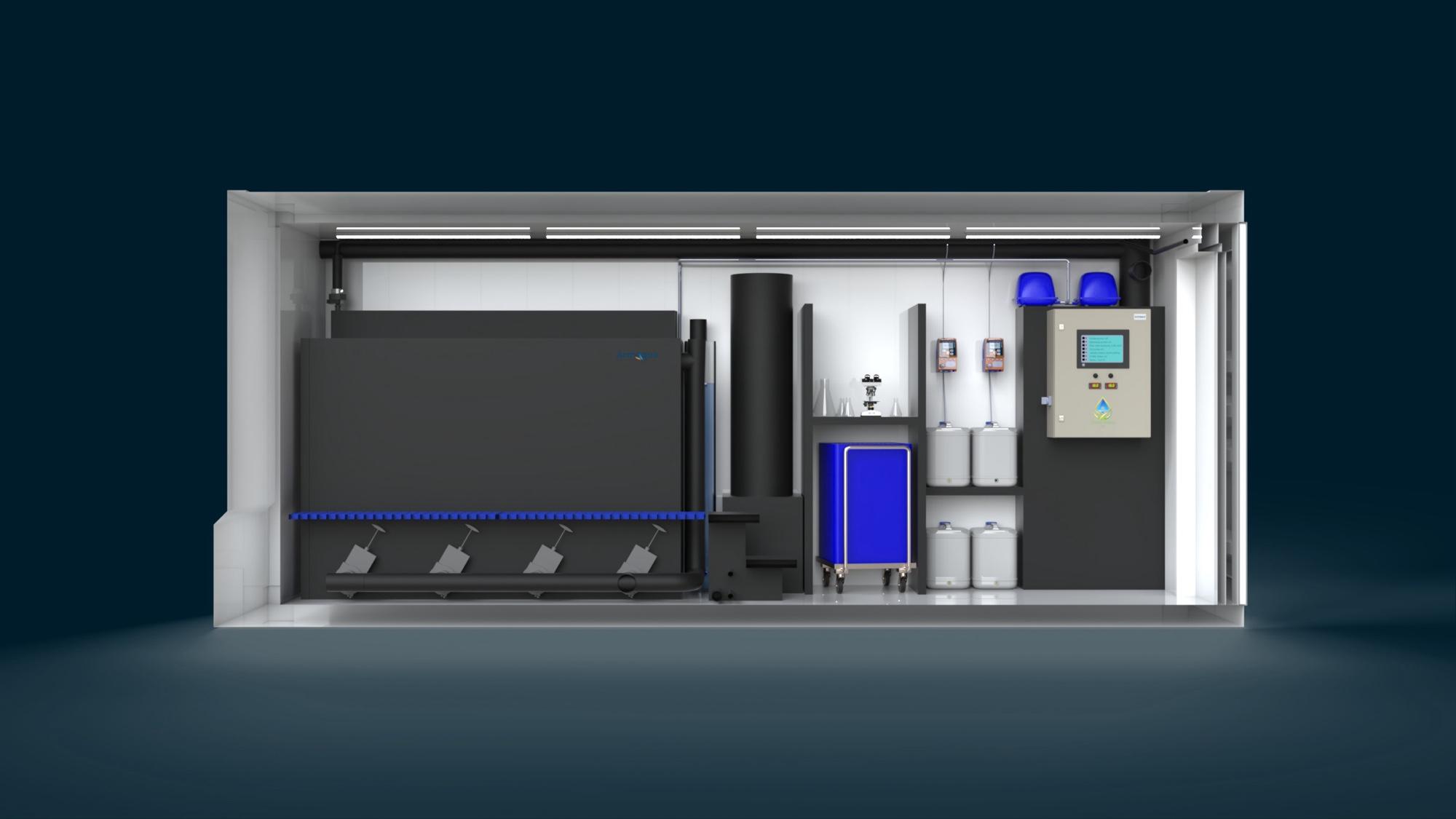
Algae tray rack
Stacked culture trays under grow lights, where algae take up nitrogen and phosphorus.
Filtration bank
Vertical panels hold the live filtration medium. Pods swap out every 6 to 8 months.
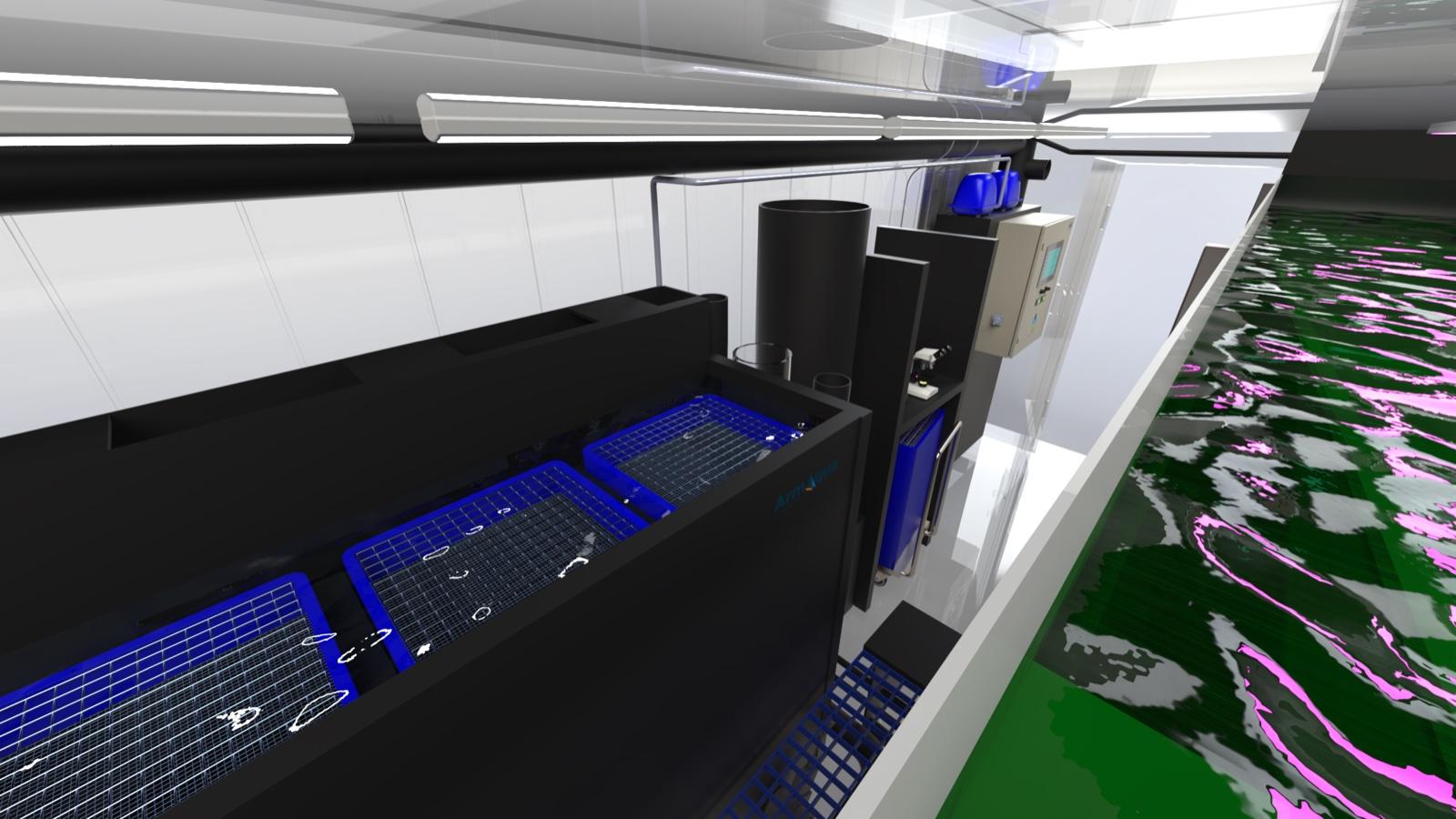
Bivalve baskets
Mesh baskets in the front tank. Oysters filter alongside the algae. IMTA-certified production.
Controls & dosing
Cabinet, tower and UV column at the door end. Water quality is reviewed across 8 parameters.
Containerized build
Climate-controlled container, designed for easy transport and easy setup.
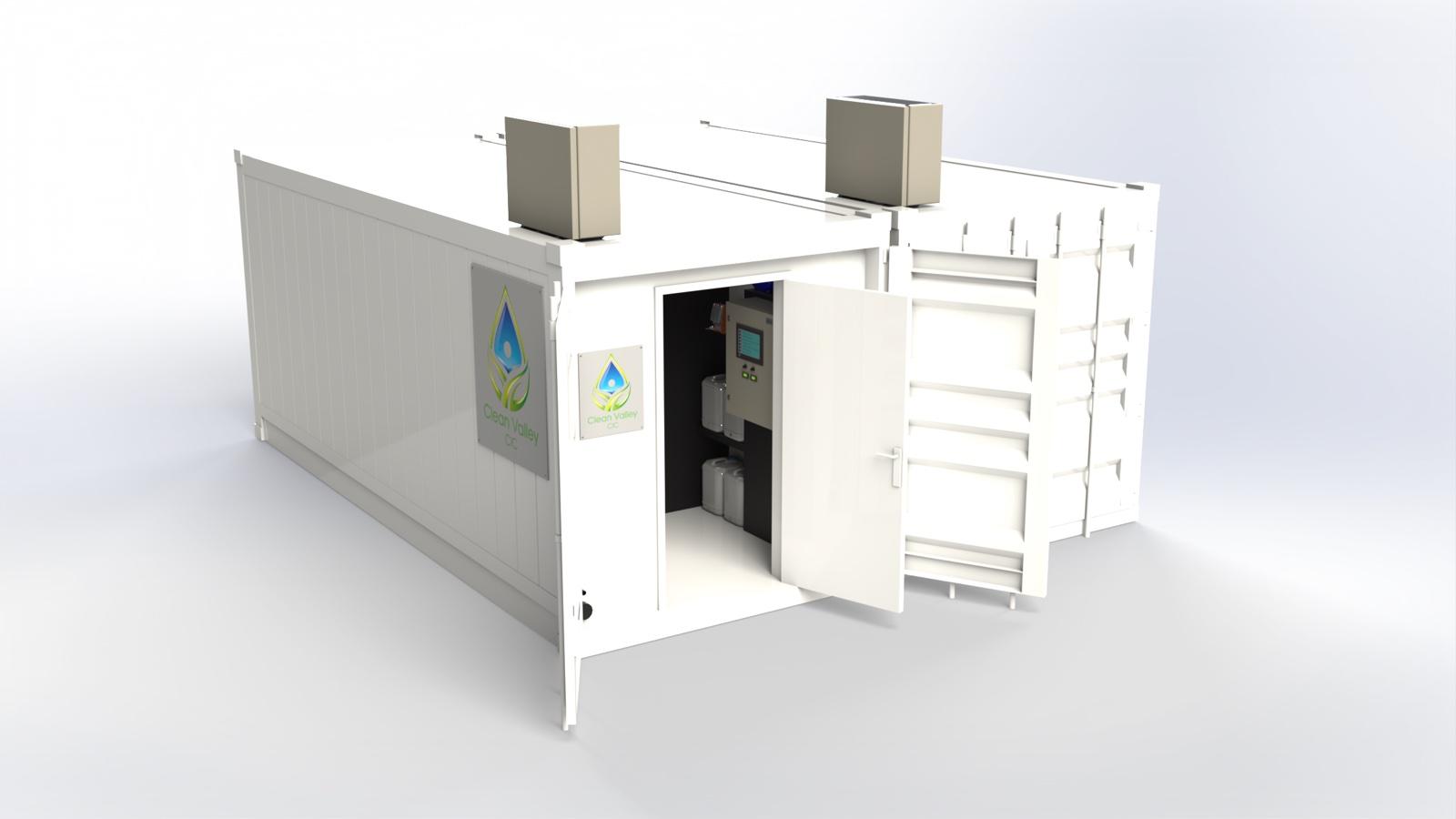
One container, delivered working.
The Mark 9 arrives as a climate-controlled container, with trays, filtration and controls inside. Under the HaaS model it deploys in three months, ready for easy transport and easy setup.
Versatile and compliant with industry standards.
Ready for implementation in marine or freshwater facilities, with effective wastewater treatment and new revenue streams from one system.
IMTA certified
RAS integration
The biofilter integrates within an existing recirculating aquaculture system.
Certified species
Integration allows aquaculture species to be IMTA-certified.
Certified bivalves
IMTA-certified bivalves (oysters) are also produced by the Biofilter.
Nature's filtration, given a flow path.
Our solution uses the natural filtration properties of both bivalves and algae to provide onshore systems with low cost, sustainable water remediation. Already through multiple tests of varying sizes, and now ready for full scale operation.
Intake
Nutrient-rich water from the facility enters the flow path.
Contact
Algae and bivalves, nature's filtration, take up nutrients as they grow.
Return
Treated water flows back to production.
Harvest
Pods are replaced every 6–8 months; collected co-products become valuable inputs to industry.
Growth for you, while being sustainable & easy.
Water Quality Control
Efficiency in water quality means less water needs to be pumped into a facility.
Additional Revenue
The revenue generated by the valorization of the Biofilter's byproducts creates cost-savings for you.
Lower Recurring Costs
Recurring costs over a ten year period are almost half of the current state-of-the-art biofilters.
Removing what causes dead zones.
The algae biofilter removes the primary pollutants, nitrogen and phosphorus, from aquaculture wastewater, preventing eutrophication in external water sources.
Want to learn more?
Get in contact! We would love to support your farms & facilities.